
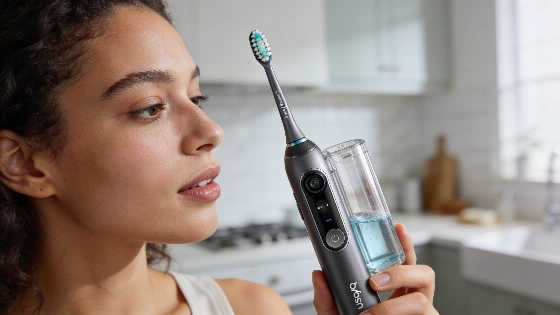
Dyson has thrown down the gauntlet to the oral care industry with the CameraJet, a £419.99 electric toothbrush that doesn't just brush-it scans, targets, and attacks plaque with AI precision. The device's most radical feature is its built-in camera system, which uses artificial intelligence to scan teeth in real time and direct a conical water spray exactly where plaque is detected. This isn't just a gimmick: in testing, Dyson claims the broader spray dislodges plaque more thoroughly than the narrow jets used by traditional water flossers.
For those who have balked at the price of high-end toothbrushes, the CameraJet's arsenal of features forces a rethink. It combines sonic and oscillating bristles for brushing, a water flosser, and a mouthwash dispenser-all in a single, surprisingly lightweight handle. The anti-gravity mouthwash tank, designed with an expanding balloon, ensures liquid flows to the brush head no matter how the device is angled. Dyson says just 12.5ml of liquid per session is enough to clear away plaque, a fraction of what most electric flossers demand.
Time is another battleground. By integrating brushing, flossing, and mouth washing, the CameraJet promises to shave about two minutes off the daily oral hygiene routine, based on the recommended time for flossing and rinsing. The charging dock, which refills the mouthwash tank in three seconds with a single button, adds to the streamlined experience. For travelers, the tank can be filled manually, eliminating the need to pack the dock in tight luggage.
At launch, Dyson is bundling the CameraJet with three toothpastes-peppermint for sensitive teeth, spearmint, and ginger mint-and two mouthwashes. Users aren't locked into Dyson's own formulas: the flosser works with plain water, and any toothpaste can be used, though the company warns that overly foamy pastes (high in SLS) may interfere with the camera's visibility between teeth. The device is available for purchase now on the Dyson website.
Having handled the CameraJet at its Paris unveiling, I was struck by its balance and weight, which matches that of a standard Oral-B electric brush despite the added tank. The conical spray, while a bit messy on a demo model, is likely to be more contained in actual use-a problem Dyson's engineers specifically set out to solve after identifying excess spray as a flaw in existing water flossers. The hands-on experience suggests a device engineered for both effectiveness and convenience, though a full test will reveal whether it lives up to its claims.
Dyson's CameraJet is not just another premium gadget-it's a direct challenge to the likes of the Oral-B iO10 and Waterpik, aiming to set a new standard for what an electric toothbrush can do. By merging AI-driven imaging, targeted water flossing, and a multi-use dock, Dyson is betting that consumers will pay for genuine innovation that saves time and delivers a more thorough clean. If the CameraJet performs as promised, it could force the rest of the industry to rethink what's possible in daily oral care.