
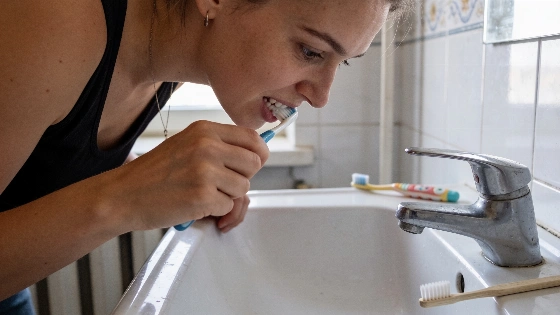
In Delta Dental's 2026 survey, 72% of adults said they brush twice a day and 73% said they floss daily. Only 55% replace their toothbrush every three months, as recommended.
Healthy People 2030 reported that 73.2% of children and adolescents from low-income households received a preventive dental visit in 2022-2023. The measure reflects access to preventive care, not the quality of home care or clinical outcomes.
Among adults who miss the three-month replacement schedule, 46% say they forget. Another 42% wait until the bristles look worn, while 30% do not buy a replacement during routine shopping trips. The gap is practical: many people know the routine but do not keep it up.
Younger adults set the pace for brushing
Gen Z respondents reported the highest rate of brushing twice a day, at 78%. Millennials followed at 74%, while the figure fell to 69% among both Gen X and Boomer respondents.
A toothbrush or electric toothbrush replacement head should generally be changed every three to four months, and sooner when bristles become worn, deformed, or frayed. For electric models, the replacement applies to the working head rather than the entire device.
Preventive care moves closer to routine
Among adults who visited a dentist in 2025, 89% said the visit was for preventive care. That was up from 84% in 2024. The report also found that 90% consider a preventive dental examination as important as an annual physical examination, up from 87% in 2025.
The survey covers household behaviour and attitudes toward regular care. It does not establish clinical outcomes, but it does show stronger reported engagement with prevention. The American Dental Association says the right interval between dental visits depends on caries risk, gum disease, age, medical history, and previous dental problems. A universal six-month rule does not apply to everyone.
Parents reported a sharp rise in children's daily routines. The share of children brushing twice a day climbed from 67% in 2025 to 75% in 2026. Daily flossing rose from 50% to 64%. Readers can find more context on why brushing alone may not cover every preventive need in our earlier gum health report.
What the survey can and cannot show
Delta Dental Plans Association commissioned Material Holdings, LLC to conduct the research between January 5 and January 15, 2026. The online survey included 1,000 nationally representative U.S. adults aged 18 and over and 1,000 parents of children aged 12 and under. Participants came from an opt-in panel, geographic quotas were used, and the reported margin of error is plus or minus 3%.
James W. Hutchison, President & CEO, Delta Dental Plans Association, said adults are increasingly seeking preventive dental care while maintaining strong hygiene routines. He also pointed to toothbrush replacement as an area for more education, alongside access and prevention work.
Official dental-care guidance advises people to clean between their teeth gently rather than force floss into the gums. Anyone with bleeding, pain, or persistent irritation should discuss those symptoms with a dentist instead of trying to diagnose the problem alone.
Reported brushing, flossing, preventive attendance, and children's routines all moved in a favourable direction. Toothbrush replacement still falls short of the recommended schedule, so reminders and practical follow-through remain part of everyday prevention. Dental teams and patients can build on the gains by turning those reminders into daily and three-month habits.