At West Lake Dentistry in Denver, North Carolina, the discussion starts with a dental evaluation of oral health and airway concerns. Patients may arrive after waking exhausted, snoring loudly, or noticing interrupted breathing during sleep.
The joint AASM/AADSM guideline reviewed 51 qualifying studies before recommending custom oral appliances over non-custom devices for appropriate patients.
That boundary matters. A dental device is not a medical diagnosis. It may still be part of care for some diagnosed adults, including some patients with mild to moderate obstructive sleep apnea or those who cannot tolerate positive airway pressure therapy.
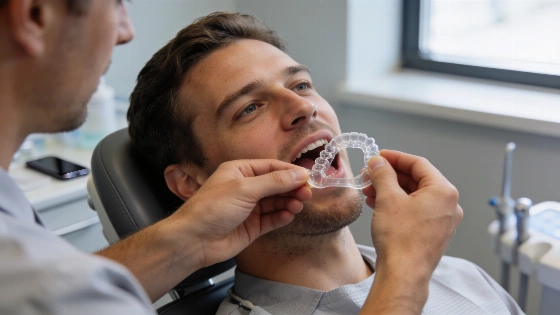
The 2015 AASM/AADSM guidance supports a custom, titratable appliance when oral-appliance therapy is chosen. It also recommends follow-up sleep testing to confirm whether the treatment works.
Obstructive sleep apnea develops when the upper airway narrows or becomes blocked again and again during sleep. The American Dental Association says dentists can spot related signs and risk factors during routine evaluations. They can then work with physicians or sleep specialists when a patient needs further assessment.
Dental screening can open the door to a referral. It cannot replace clinical diagnosis.
West Lake Dentistry says its Sleep Apnea Dental Device (VIVOS) service starts with a review of oral health and relevant airway factors. The assessment helps determine whether a dental device may fit the patient. It does not treat every sleep complaint as a dental problem.
Recent Vivos corporate materials describe its CARE oral medical devices as addressing anatomical factors associated with obstructive sleep apnea while the company pursues revenue-growth and cost-reduction initiatives. Those materials also report FDA clearance claims for adults across OSA severity levels and for children ages 6-17 with moderate-to-severe OSA; the claims are presented in company and market materials rather than independent regulator text available here.
Dr. Nicole Naylor said sleep-related breathing concerns can affect more than how a person feels after waking. "A dental evaluation can be one part of recognizing potential warning signs and determining whether a patient should be referred for additional sleep-related evaluation."
The practice also places the service in the wider patient-access picture. An earlier dental access report examined uncertainty around emergency services in another region. West Lake's service gives patients a clear way to discuss airway concerns with a dental team.
Many patients begin with one question: could their sleep problems be linked to their airway? Dr. Naylor said the practice can review those concerns, explain available options, and decide what type of evaluation may be appropriate.
If an appliance is prescribed, a qualified dental professional should manage its fit and titration. Medical coordination and objective follow-up are also needed.
More information is available on West Lake Dentistry's sleep apnea service page.
A dental appliance will not solve every case of sleep apnea. Dentists can help identify warning signs and coordinate the next step. Medical specialists remain responsible for diagnosis.