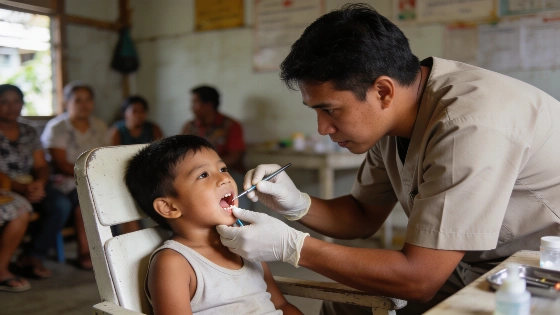
Tooth decay and gum disease have been a problem in the Philippines for years. Now, the country is rolling out its biggest oral health survey yet, hoping to finally see just how bad things are-and to find out where help is needed most.
The NSOH Phase II is the first oral health survey in the Philippines to systematically include indicators such as dental erosion, traumatic dental injuries, and oral mucosal lesions, alongside traditional measures like caries and periodontal disease.
This time, researchers are checking Filipinos in five age groups set by the World Health Organization: 5, 12, 15-19, 35-44, and 65-74 years old. They're measuring how common and how serious dental caries, gum disease, and problems with the mouth's soft tissues are. The survey also looks at dental erosion, dental injuries, mouth lesions, denture use, and past dental work. They're digging into habits and surroundings too-how people brush, when they go to the dentist, smoking, eating, and whether they can get dental care at all.
The Philippine Statistics Authority cleared the survey under its Statistical Survey Review and Clearance System. Data collection runs from August 18 to October 30, 2025. Final results are due April 3, 2026. Until then, any comparison with 2018 is only a guess. The Department of Health said in October 2025 that the 2023 oral health report was still being finished.
In several countries, national oral health surveys have led to targeted funding increases for children's dental services and the expansion of preventive care programs, highlighting the impact of robust data on policy decisions.
Oral disease is still common in the Philippines, and affordable dental care is out of reach for many. NSOH Phase II could set the stage for a new focus on prevention. With solid, trusted data, the government could finally put oral health at the center of universal health care planning. As the country waits for the results, the need for action is obvious. Without real change, untreated dental disease will keep hurting millions. Recent reported scams that prey on people needing dental care only make it clearer: the country needs honest, accessible, and prevention-based dental health plans built on real evidence.
Other countries are watching oral health closely too. In the United Kingdom, regular tracking of children's dental health workforce and activity helps decide where resources go and how services are planned. As shown in UK government statistics, collecting good data is still at the heart of strong public health work.