
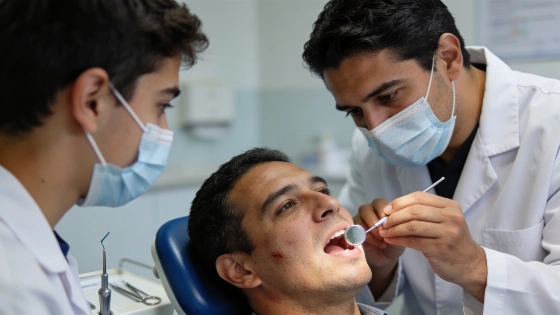
On October 3, the observance is recognised across Argentina and Latin America. Bolivia, Colombia, Cuba, Ecuador, Paraguay, the Dominican Republic, Uruguay and Venezuela also mark the date, according to a regional observance report.
Universidad de Mendoza and its School of Health Sciences are using the day to recognise professionals who protect oral health. Their work includes clinical care, education, research and prevention in local communities. The university presents dentistry as part of wider healthcare, not as a field limited to the mouth.
Recent coverage citing the World Health Organization estimates that oral diseases affect almost 3.7 billion people worldwide.
A regional profession shaped by cooperation
The date goes back to the Pan-American Dental Congress held in Santiago, Chile, in 1917. That meeting led to the creation of the Latin American Dental Federation, known as FOLA. It also gave the region a base for cooperation, professional development and scientific work in dentistry.
Later accounts link the formal recognition of October 3 to the second FOLA congress in Buenos Aires in 1925. Argentine delegate Raúl Loustalán proposed establishing the commemorative date at that meeting.
The history points to more than individual practice. It also traces how the profession organised itself across the region.
In 2026 Paraguay's Ministry of Public Health and Social Welfare used October 3 to reaffirm a commitment to preventive comprehensive and accessible dental care. The message presents oral health as a public-health responsibility alongside clinical treatment.
Oral health is part of overall wellbeing
Universidad de Mendoza's main point is simple: oral health is a key part of overall health. That gives the October 3 observance a practical meaning for patients and professionals. Prevention and professional care both matter to community wellbeing.
The same view takes oral care beyond the clinic. A separate earlier trauma report examined prevention and community awareness as necessary parts of protecting oral health.
Paraguay's Ministry of Public Health and Social Welfare has also described the occasion in terms of preventive, comprehensive and accessible care. Its position supports the regional view of dentistry as part of public health, rather than an isolated medical specialty.
At Universidad de Mendoza, the occasion also renews a pledge to provide strong academic training for future health professionals. Those future dentists will need clinical responsibility, research, teaching and prevention skills.
That is the wider message.
Dentistry's public value comes from more than treatment. It also depends on careful clinical work, scientific education and prevention in communities. Latin American Dentistry Day recognises that work and its role in oral and integral health.