
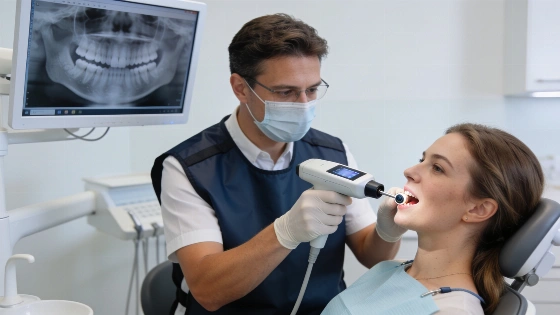
Handheld X-ray devices and AI-powered imaging software are changing how dental radiography works. Some market forecasts predict the intraoral X-ray equipment sector could reach a trillion dollars by 2035, but independent checks do not support the widely cited USD 815.89 billion (2025) and USD 1,279.15 billion (2035) figures. These numbers are often repeated without clear evidence, so it's worth looking closely at the real data behind industry growth projections.
Label transparency in dental imaging parallels the supplement industry: clear disclosure of device specifications, radiation dose, and software capabilities is essential for informed clinical decision-making.
Regulatory and product updates in 2026 show how quickly things are changing. Planmeca's newsroom confirms its Romexis platform added tighter digital workflow integration, including access to 2D images, photographs, and live intraoral camera feeds. This supports the industry's push for seamless software and hardware connections. However, claims of a March 2026 FDA clearance for the NOMAD Pro 3 handheld X-ray device are not confirmed in the FDA's De Novo database, which lists active device decisions in September 2026 but no specific record for the NOMAD Pro 3. Similarly, while Carestream Dental's ecosystem received new AI workflow updates in September 2026, there is no clear evidence confirming the CS 1300 launch or its coverage in the British Dental Journal.
Industry consolidation is happening, with vendors aiming for scale and integration. Still, independent searches do not confirm the reported August 2026 acquisitions involving Denterprise International or Belding India. What is clear is that leading manufacturers-Sirona Dental Systems, Carestream Dental, Planmeca, VATECH, and ACTEON-are competing to deliver sharper images, smarter AI tools, and more connected workflows. Regulatory momentum is global: in 2026, Saudi Arabia's Food & Drug Authority publicly authorized two Saudi-developed AI-enabled dental imaging software products, showing that AI-assisted diagnostic tools are now approved for clinical use.
Claims Check: Regulatory authorities such as the FDA require that medical device marketing claims-like those for low-dose X-ray or AI-powered diagnostics-be substantiated by clinical evidence and transparent labeling. Unverified claims or lack of disclosure can trigger warning letters or enforcement actions, underscoring the importance of evidence-based product evaluation.
Dental diagnostics are changing fast, and digital imaging and AI are now standard. But market numbers and product claims need careful, evidence-based review. The companies that focus on transparency, regulatory compliance, and measurable clinical value will set the pace-just as in the nutrition supplement industry.